Kitchen Design
Kitchen Cabinet Styles and Materials: Slab, Shaker & Slim Shaker
Compare slab, Shaker, and slim Shaker cabinet doors, melamine surfaces, wood finishes, and construction details before choosing cabinets for a Seattle-area kitchen remodel.
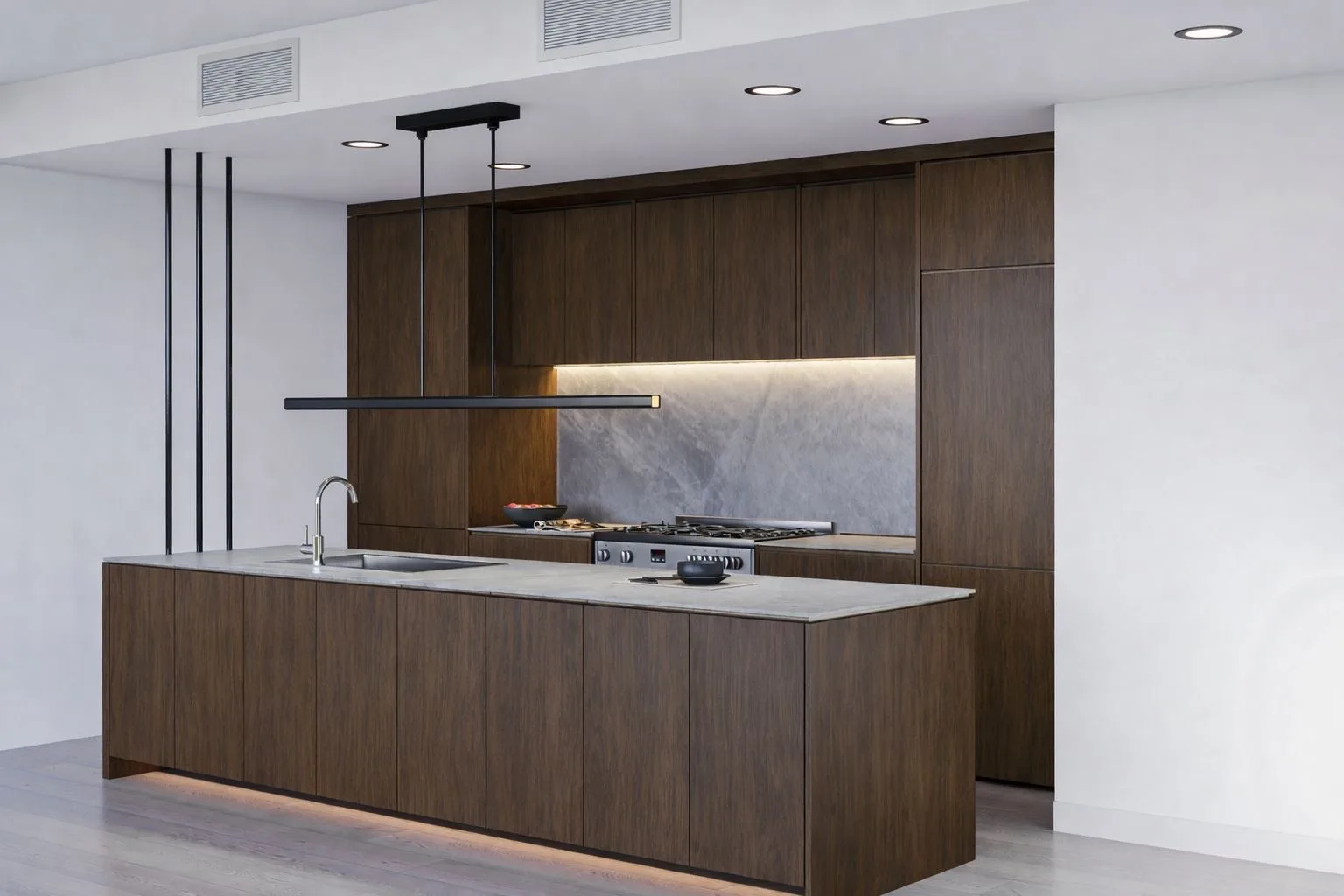
Kitchen cabinet choices are easier to compare when you separate three things: the door style you see, the materials underneath, and how much the cabinet line can be customized. Slab, Shaker, and slim Shaker describe the door profile. They do not tell you whether the cabinet box is plywood, MDF, or particleboard, or whether the cabinets are stock, semi-custom, or custom.
For a Seattle-area kitchen remodel, start with the look and storage you need, then review the actual product specification. Two cabinets can look similar in a photo and have different construction, hardware, finishes, and maintenance requirements.
Slab, Shaker, and Slim Shaker at a Glance
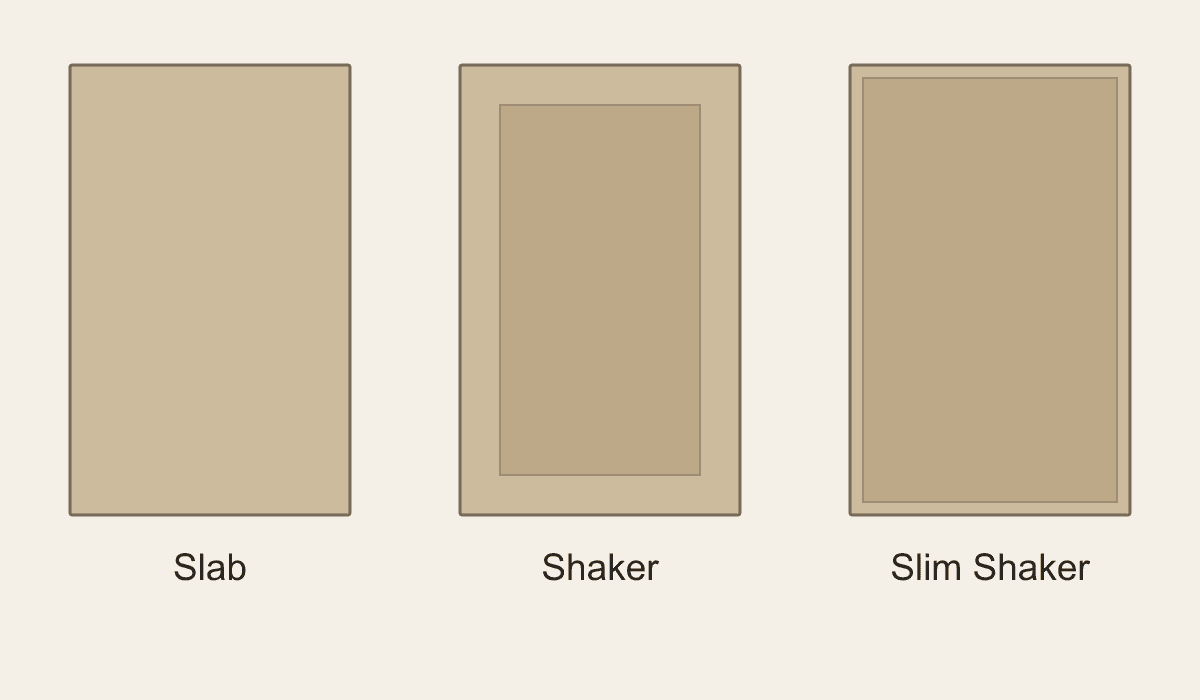
Slab has an uninterrupted flat face. Shaker has a frame surrounding a recessed center panel. Slim Shaker uses a narrower frame for a lighter visual outline. These are three profiles to compare, rather than a complete list of every cabinet style on the market.
Slab Doors with a Melamine Surface
A melamine-faced engineered panel is one option for a clean slab front. Confirm the core material: the face alone does not establish whether the panel underneath is MDF or particleboard.
The practical appeal is a simple surface and a consistent finish. Our concern is what happens at the edges and joints, especially around a sink, dishwasher, or another source of moisture. A durable face does not make the complete panel waterproof.
Before choosing this option, ask about the board grade, edge sealing, bonding system, care instructions, and permitted applications. Edge banding that lifts or peels can become a maintenance issue. We would not give every product the same failure timeline, because construction, exposure, and installation differ.
EGGER’s panel processing guidance explains how moisture and ambient humidity affect wood-based materials.
Slab Doors with a Natural Wood Finish
A wood finish can be a good fit when visible grain and a warmer appearance are central to the design. Ask whether the proposed door is solid wood or veneer over an engineered core. A photograph does not establish that distinction.
Compare the actual species, finish, price, and maintenance requirements. Where strong sunlight reaches the cabinets, ask the manufacturer about expected color changes and finish care before approving a sample. The words “solid wood” do not replace a review of the complete cabinet specification.
Shaker Doors
A Shaker door uses a surrounding frame and a recessed panel. The frame gives the front a more defined outline than a slab door. It can work with painted finishes or visible wood grain, depending on the selected product.
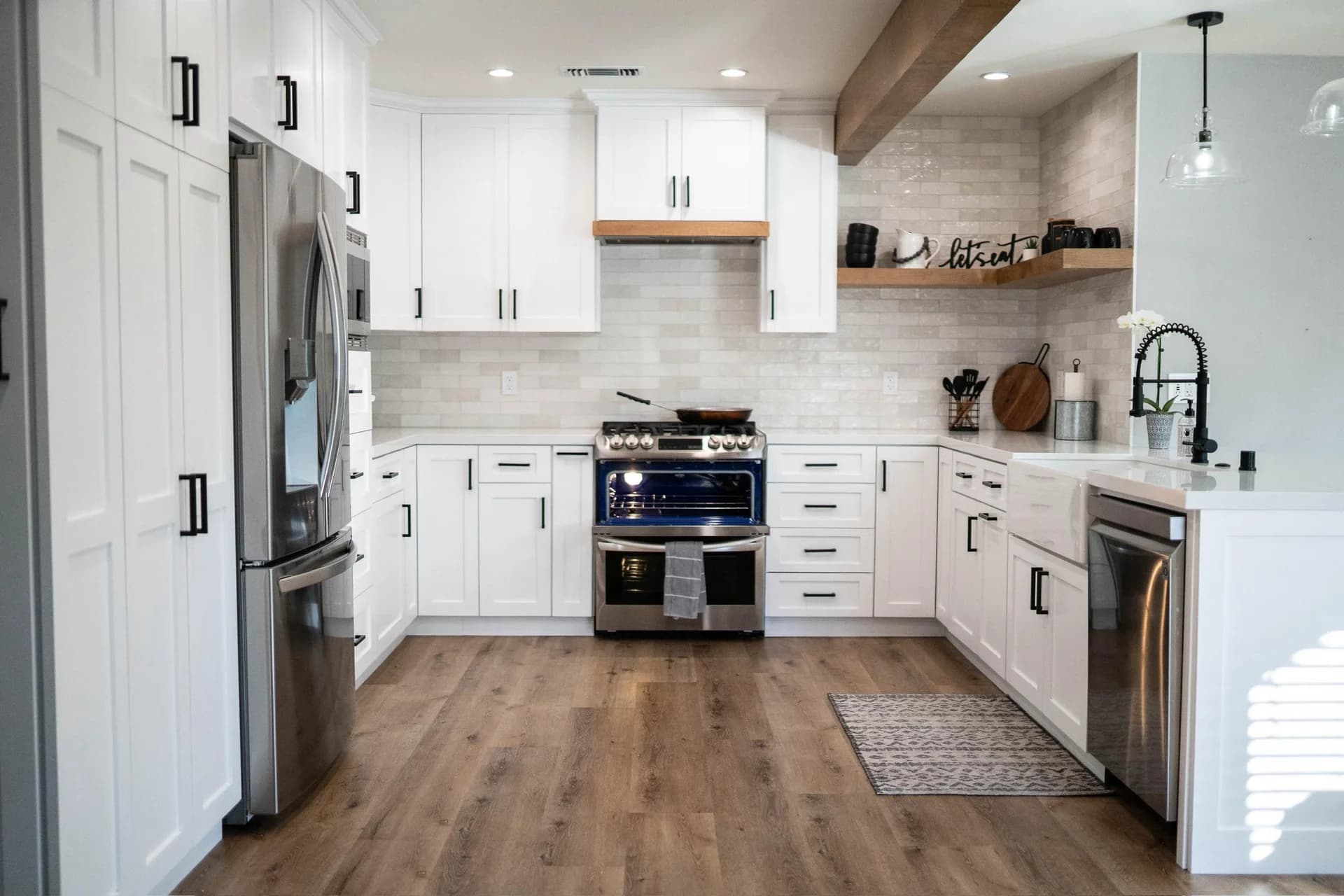
Some framed doors combine a solid-wood frame with an engineered center panel. The exact combination varies by cabinet line. Do not assume that every Shaker panel is particleboard or that all painted doors use the same construction.
Cabinet Joint’s paint-finish guidance describes a hybrid door with a solid-wood frame and MDF center panel, and explains how humidity can affect wood and painted joints. That is a product-specific example, not a universal specification for Shaker cabinets.
Slim Shaker Doors
Slim Shaker keeps the framed-and-recessed-panel idea but narrows the surrounding frame. It is worth comparing when you like a defined door profile but want less visual emphasis on the frame.
The slimmer appearance does not establish better or worse cabinet-box quality. Ask which frame and panel materials are offered, how the finish is applied, and which hardware options are available in that line. Review an actual sample before choosing based on a rendering.
Plywood, MDF, Particleboard, and Veneer Are Different Specifications
The cabinet box, door frame, center panel, drawer box, and decorative face may use different materials. “Wood cabinets” is not a complete description of the assembly.
Ask the supplier to identify each component. Confirm the panel thickness, joinery, exposed edges, drawer glides, hinge specification, shelf support, finish, and warranty. Do not assume that all ready-made boxes use half-inch MDF or that all semi-custom boxes use the same thickness of plywood.
A veneer is a surface layer of wood over another material; it is not the same description as a solid-wood panel. For a painted door, ask which substrate the manufacturer recommends for that finish.
Stock, Preassembled, Semi-Custom, and Custom Are a Separate Decision
Stock describes a defined range of sizes and options. Ready-to-assemble and preassembled describe how cabinets arrive. Neither delivery method is a material or quality grade. Home Depot’s construction guide includes ready-to-assemble and factory-assembled plywood options.
Semi-custom and custom describe a different level of project flexibility. Country of manufacture and retailer name alone do not establish quality. We compare the actual line, its available colors and dimensions, hardware, and installation requirements rather than assigning a universal two-to-five-year life to preassembled cabinetry.
For layout flexibility, ordering choices, and where customization is worth paying for, use our separate custom vs. semi-custom cabinet guide.
What We Would Compare Before Ordering
First, choose the door profile and finish direction. Then review a physical sample and the component specifications together. Check the edges, how the door and drawer hardware operates, the available storage, and any limits on dimensions or finish choices.
Next, compare the complete proposed cabinet package: boxes, doors, drawers, finished end panels, fillers, trim, organizers, installation, and warranty. A lower price may reflect a smaller package or different specifications, so compare the same scope.
Finally, coordinate the cabinet plan with the appliances, countertop, lighting, and room dimensions before placing the order. Our full kitchen remodel scope guide explains how these decisions connect.
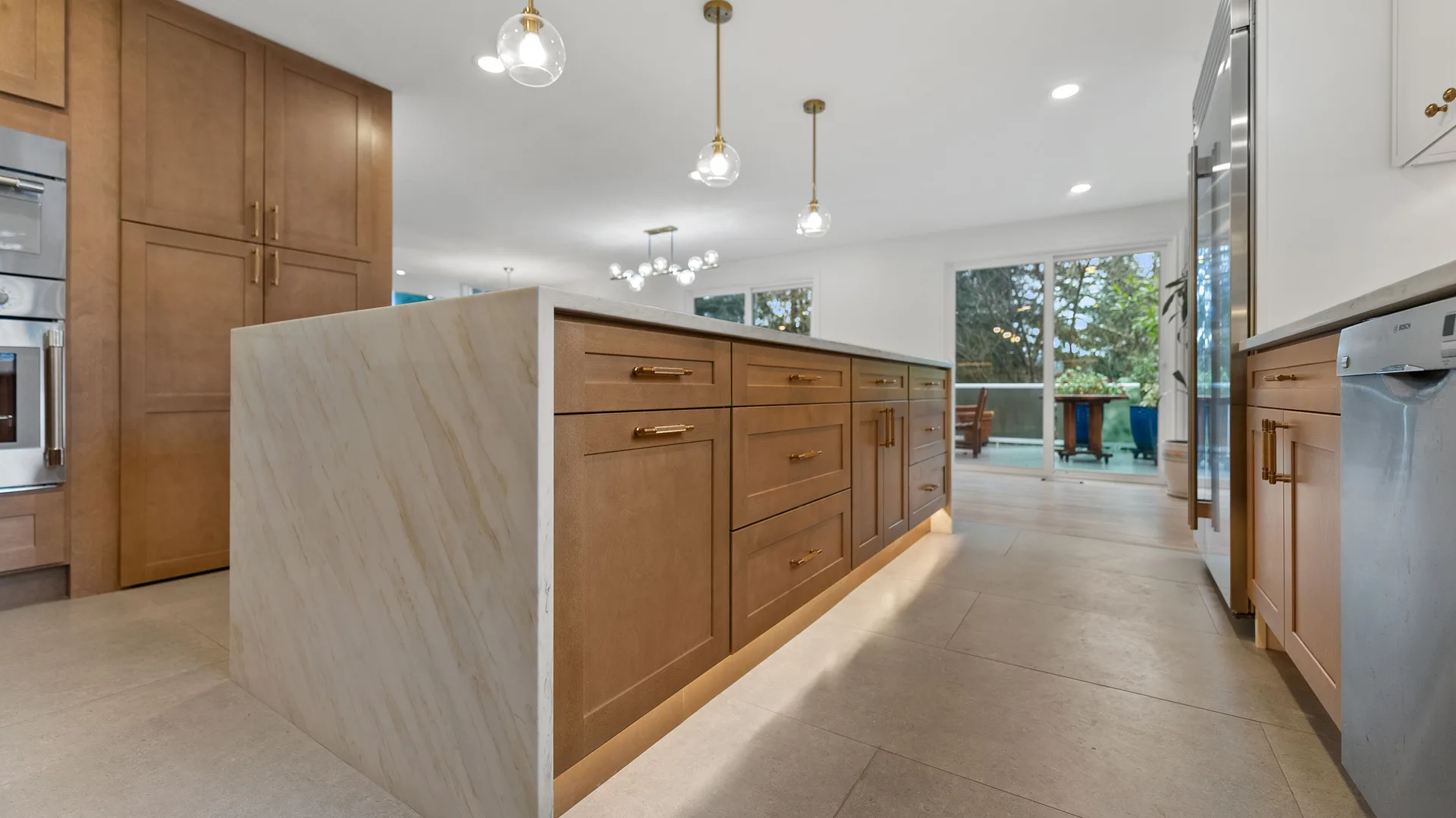
Explore Fine Element Construction’s kitchen remodeling services or the existing Mercer Island kitchen project as you plan your layout and finishes. The images in this guide illustrate visible design details; confirm materials and construction from the proposed product specifications.
Keep exploring
← Back to the journal